01 / ADAPTATION
Build resilience.
Help communities prepare for climate risks and strengthen the systems that everyday life depends on.
- Disaster resilience and management
- Health security
- Water-cycle management
- Food and agriculture security
OUR APPROACH
Water, food, health and energy are connected. Our approach brings them into one plan, shaped with the people who live there.
USDF / THE FRAMEWORK
The UrjaGram Sustainable Development Framework brings climate adaptation and energy transition together at village scale.
AdaptationResilient people, resources and local systems.
MitigationCleaner energy and lower emissions.
Village investment planGram Panchayat Integrated Investment Plan (GP-IIP)
01 / ADAPTATION
Help communities prepare for climate risks and strengthen the systems that everyday life depends on.
02 / MITIGATION
Explore cleaner energy and nature-based approaches alongside a roadmap for reducing greenhouse gases.
Both pillars come together in a Gram Panchayat Integrated Investment Plan (GP-IIP): a shared plan for turning village priorities into projects, identifying finance and tracking progress.
DEVTech / IN DEVELOPMENT
DEVTech is our AI-driven project development and management platform, currently in development. It is being designed to connect village knowledge, planning and delivery through four capabilities.
01 / PLANNED CAPABILITY
Virtual models of villages to explore climate scenarios and compare possible interventions before acting.
02 / PLANNED CAPABILITY
Development roadmaps shaped around the needs, resources and priorities of each Gram Panchayat.
03 / PLANNED CAPABILITY
A shared place for community groups, students, interns and institutions to connect projects, resources and responsibilities.
04 / PLANNED CAPABILITY
Tools to track outcomes, review progress towards development goals and support emissions and carbon-credit reporting.
The platform is intended to support the people doing the work: SHG women, school students, technical interns and their partners. Local knowledge and field checks remain part of every decision.
Meet the human capital engineListen
Learn from farmers, families and village groups. Understand local needs and the good work already happening.
Plan
Bring local knowledge and technical skills together. Compare ideas, resources and practical next steps.
Try
Co-design and test projects with the community. Check modelled choices against conditions on the ground.
Improve
Review outcomes and community feedback. Improve the approach before taking it further.
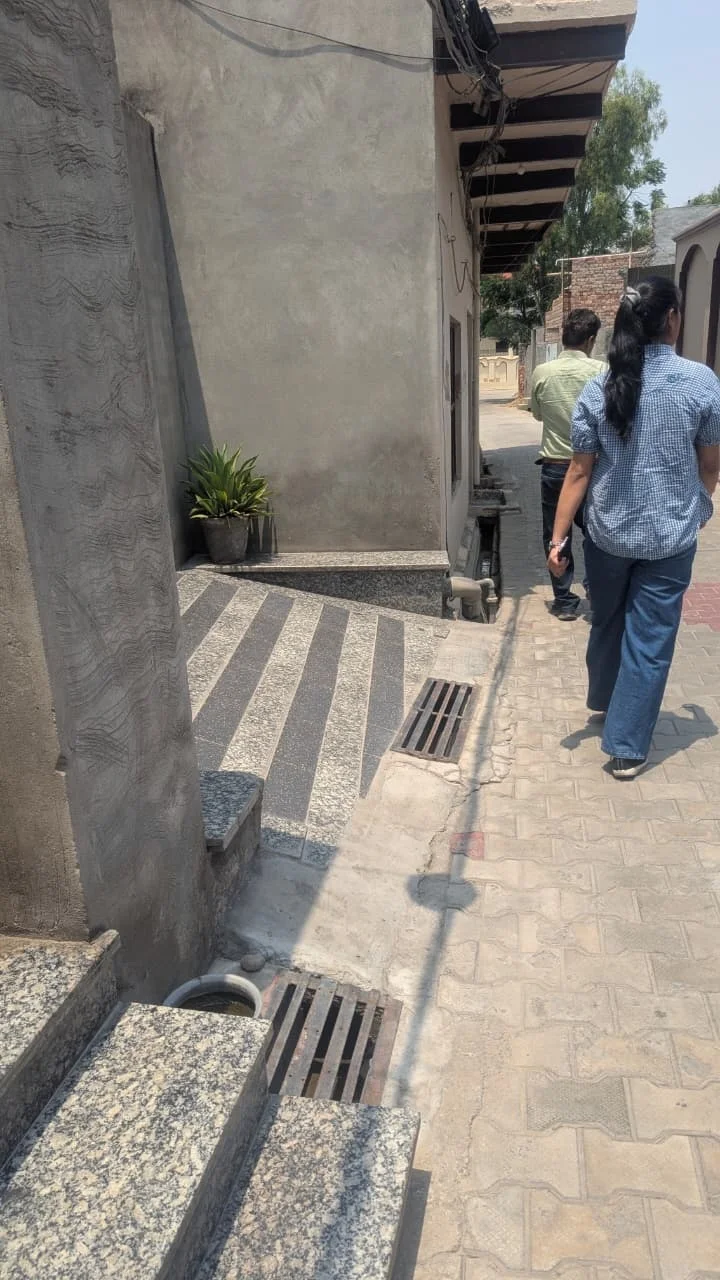
LEARNING FROM WHAT’S ALREADY HERE
Rurka Kalan already has community initiatives, including water work supported by the Youth Football Club (YFC). Our teams learn from this experience and the people behind it.
Read about the village visits